

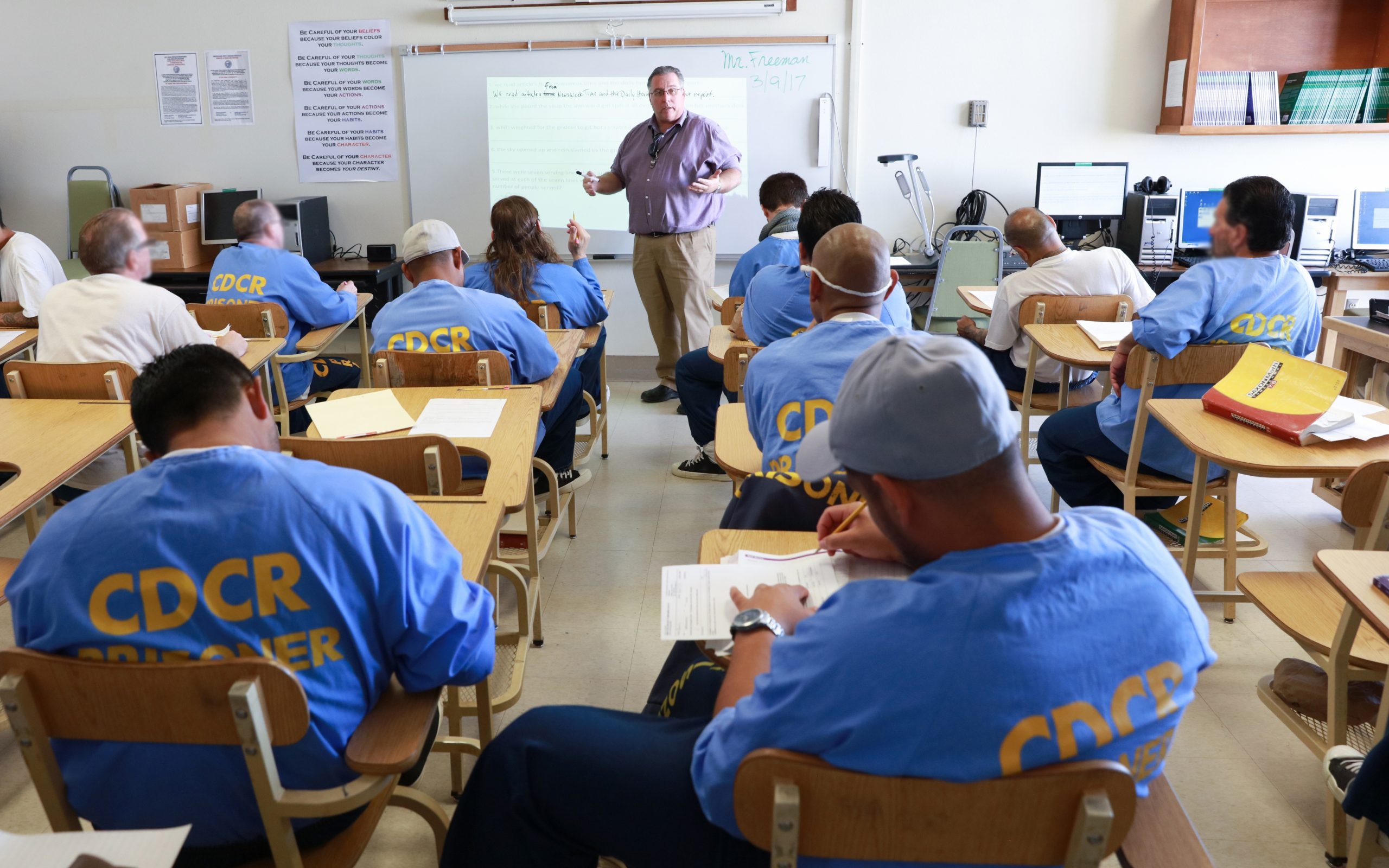
In honor of Teachers Appreciation Week, CDCR recognizes the efforts and dedication of educators giving incarcerated students a chance to positively contribute to their communities.
The department has a comprehensive education system for incarcerated individuals. Every institution has accredited adult school offerings for adult basic education, high school diploma, and GED programs.
CDCR institutions also offer secondary education opportunities including:
- career and technical education (CTE) programs
- partnering with local community colleges and additional distance colleges to provide access to higher education for incarcerated persons.
Within CDCR, there are about 13,000 incarcerated students enrolled in adult basic and secondary education. There are also 4,500 in CTE and more than 10,000 in college.
Dedication to students’ success
These programs continue to be successful due to the dedicated and compassionate educators who work with students daily. CDCR currently employs more than 700 teachers across all 30 of its institutions. These specialized educators do more than just show up to teach a class; they often provide encouragement and attention to incarcerated individuals who may have never received educational support before.
The influence of education and teachers in reducing recidivism and supporting safer, more stable communities is backed by data.
Research shows education may have a positive impact on post-release recidivism, with individuals who participated in rehabilitative programs having lower rates of recidivism than those who do not participate. In the three years after an individual is released from CDCR custody, those with an academic education achievement had on average a 12 percent lower rate of recidivism for re-arrests, convictions and returning to prison when compared to individuals who did not pursue education while incarcerated. The rate for recidivism for those who pursued CTE was also reduced by an average of 14 percent.
Story by the Office of Public and Employee Communications
Follow CDCR on YouTube, Facebook, X (formerly Twitter). Listen to the CDCR Unlocked podcast.
Read more rehabilitation stories.
Related content
In honor of Teachers Appreciation Week, CDCR recognizes the efforts and dedication of educators giving incarcerated students a chance to…
San Quentin celebrated its third annual puppy graduation partnering with Canine Companions and pairing incarcerated individuals with service-dog prospects. Dozens…
The Correctional Training Facility (CTF) commemorated National Crime Victims’ Rights Week 2026 with a series of events held April 20-24.…
Maria Franco, formerly incarcerated at Central California Women’s Facility (CCWF) in Chowchilla, was serving a 34-to-life sentence when she began…
Incarcerated at 19 years old, Steven Bernal doubted change was possible for him as he faced decades in prison. “I…
CDCR Undersecretary Jason Johnson visited California Men’s Colony (CMC) to observe the Creative Acts Virtual Reality (VR) Program. Johnson observed…
